Makineritë hibride janë një nga kategoritë më të nxehta të pajisjeve në prodhimin e avancuar. Ja se si funksionojnë ato, çfarë ofrojnë, ku shkëlqejnë dhe gabimet që i ngatërrojnë blerësit për herë të parë.
Çfarë është Prodhimi Hibrid Aditiv dhe Zbritës?
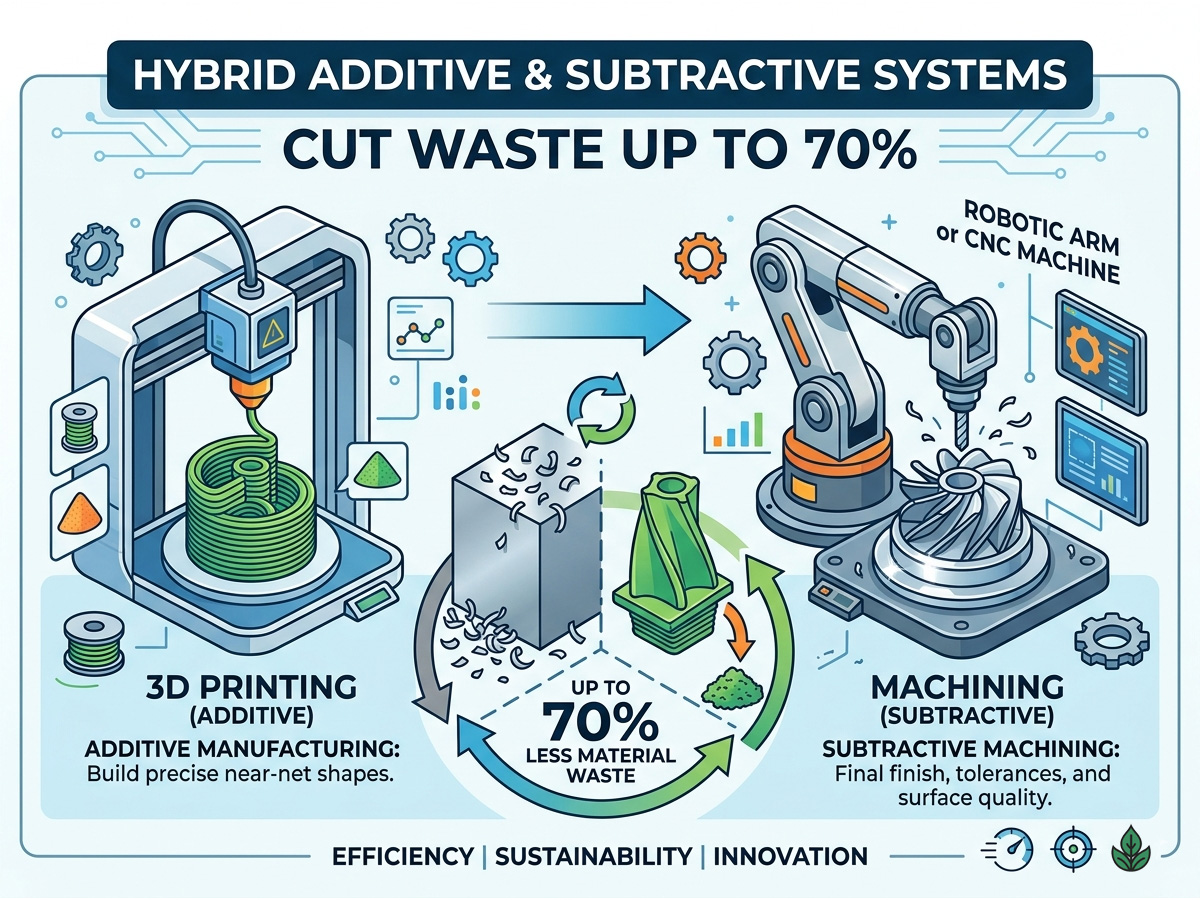
Për të kuptuar hibridin, së pari ju nevojiten 2 gjysmat që ai kombinon. Prodhimi aditiv ndërton një pjesë duke shtuar material shtresë pas shtrese. Prodhimi zbritës e zvogëlon një pjesë duke hequr materialin nga një bllok i ngurtë.
Një sistem hibrid i bën të dyja brenda një makine. Zakonisht ai çifton frezimin CNC me 5 boshte me një kokë depozitimi metali, duke kaluar midis ndërtimit dhe prerjes ndërsa pjesa merr formë.
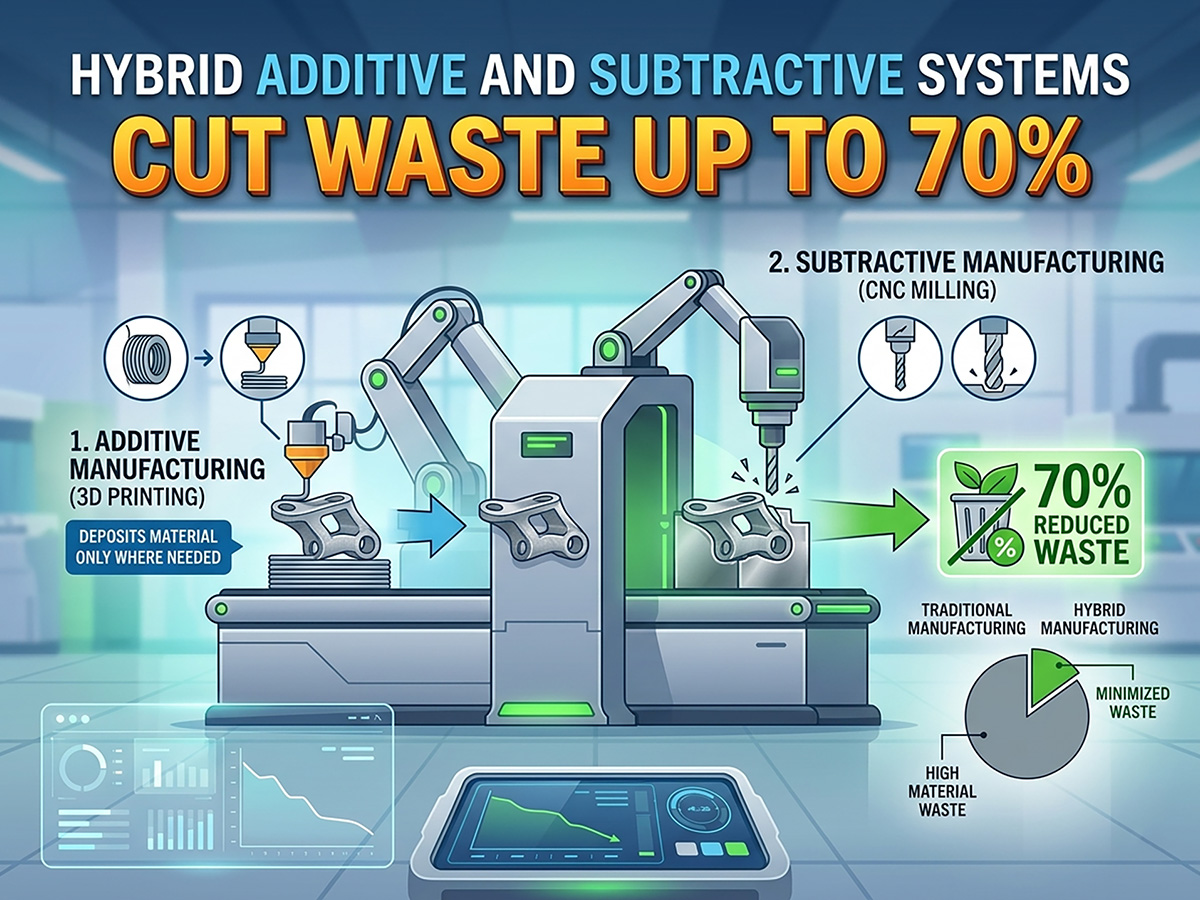
Aditiv vs. Zbritës: Dallimi Thelbësor
| Matje | Shtues (Ndërtues) | Zbritje (Shkurtim) |
|---|---|---|
| Proces | Depoziton metalin shtresë pas shtrese | Heq metalin nga një bllok i ngurtë |
| Mbetjet materiale | Shumë i ulët, përdor vetëm atë që nevojitet | I lartë, shumë bëhet copëza dhe mbeturina |
| Liria e gjeometrisë | Forma të brendshme komplekse të mundshme | I kufizuar nga qasja në mjet |
| përfundojë sipërfaqe | I ashpër, ka nevojë për përfundim | Përfundim i lëmuar dhe preciz |
| Më e mira në | Forma, riparime, veshje afër rrjetit | Toleranca të ngushta, detaje të imëta |
Prodhimi hibrid kap më të mirën e të dyjave. Për një vështrim më të thellë se si krahasohen këto 2 filozofi veçmas, shihni udhëzuesin tonë mbi 3D printer kundrejt makinës CNC.
Si funksionon një makinë hibride
Fluksi i punës brenda një sistemi hibrid ndjek një ritëm logjik ndërtimi dhe përfundimi. Makina alternon midis shtimit dhe heqjes së materialit derisa pjesa të jetë e përfunduar.
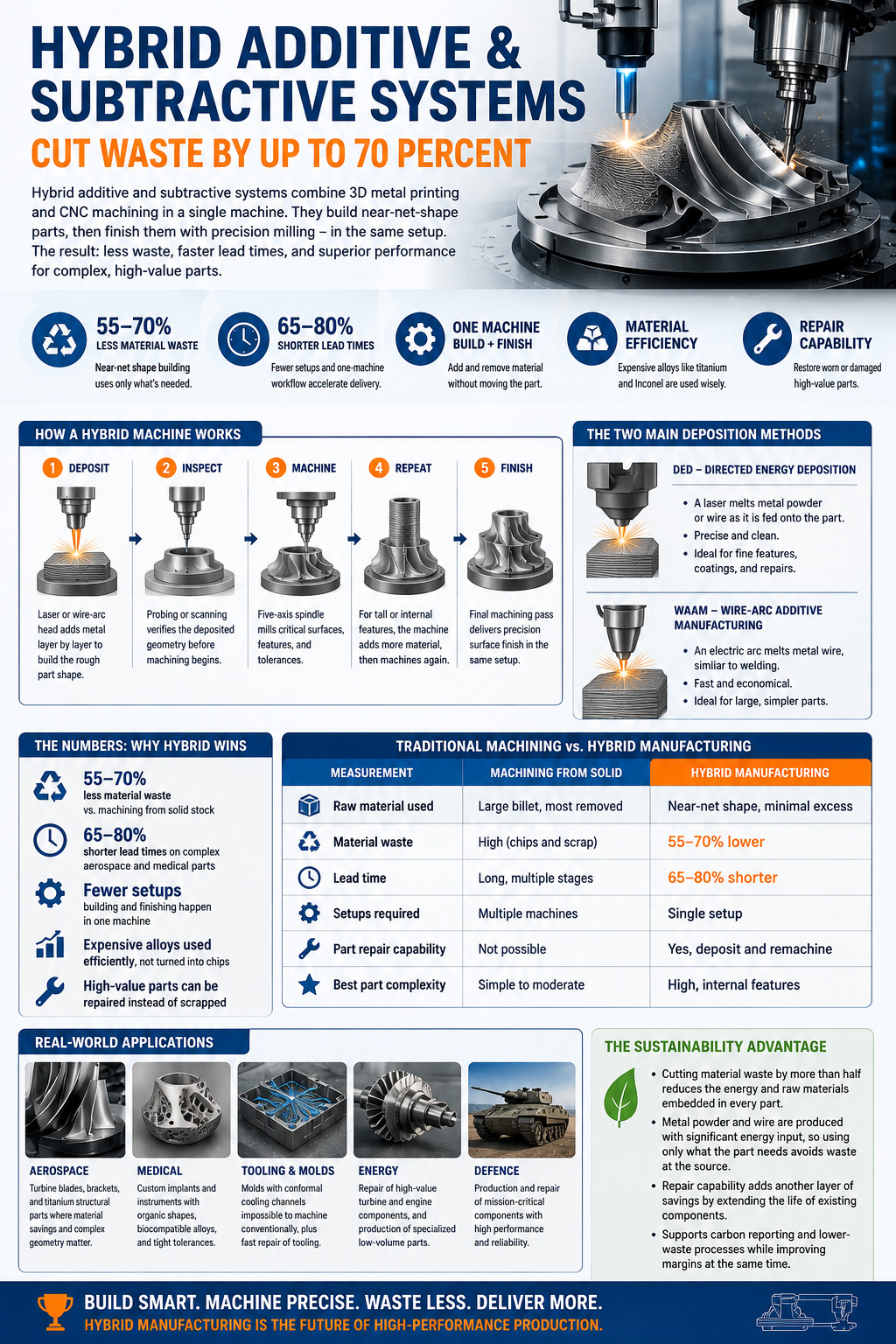
1. DepozitëNjë kokë lazeri ose me hark teli shkrin pluhur metalik ose tel për të ndërtuar formën e pjesës së ashpër direkt në shtrat.
2. inspektojSondazhi ose skanimi kontrollon gjeometrinë e depozituar përpara se të fillojë përpunimi mekanik.
3. MakinëBoshti me 5 boshte frezon sipërfaqet, karakteristikat dhe tolerancat kritike ndaj specifikimeve përfundimtare.
4. PërsëritjePër elementë të lartë ose të brendshëm, makina shton më shumë material, pastaj e përpunon përsëri, shtresë pas shtrese.
5. FundNjë kalim përfundimtar i përpunimit ofron përfundimin e sipërfaqes me precizion në të njëjtin konfigurim, pa transferim të pjesëve.
2 Metodat Kryesore të Depozitimit
Sistemet hibride përdorin një nga 2 teknologjitë shtesë, secila e përshtatshme për madhësi dhe materiale të ndryshme të pjesëve:
• Depozitimi i Drejtuar i Energjisë (DED)Një lazer shkrin pluhurin ose telin metalik ndërsa ai futet në pjesë. I saktë dhe i pastër, ideal për karakteristika të imëta, veshje dhe riparime.
• Prodhimi i aditivëve me hark teli (WAAM)Një hark elektrik shkrin tela metalike, ngjashëm me saldimin. I shpejtë dhe ekonomik për pjesë të mëdha dhe më të thjeshta.
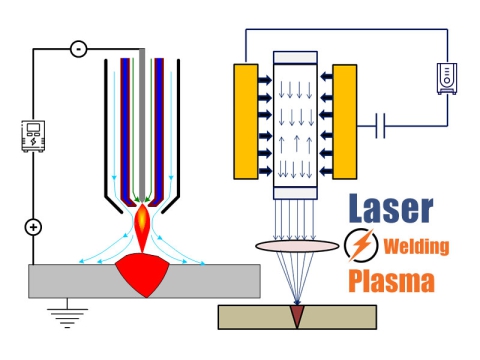
Ana e depozitimit ndan pjesën më të madhe të ADN-së së saj me teknologjinë industriale të saldimit. STYLECNC saldatorë me lazer përdorin të njëjtat baza të lazerit me fibra që fuqizojnë kokat e depozitimit të metaleve me bazë lazeri.
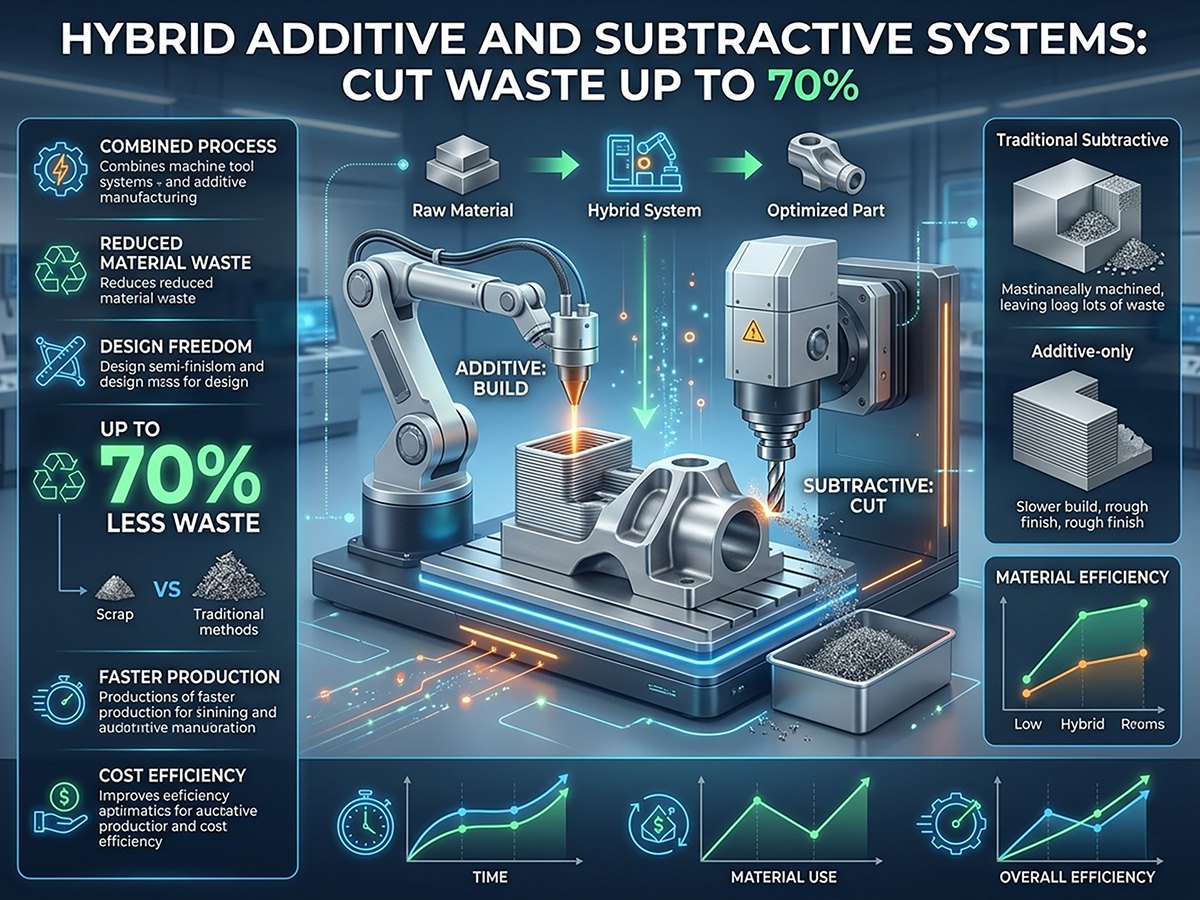
Numrat: Pse hibridi shkurton humbjet dhe kohën.
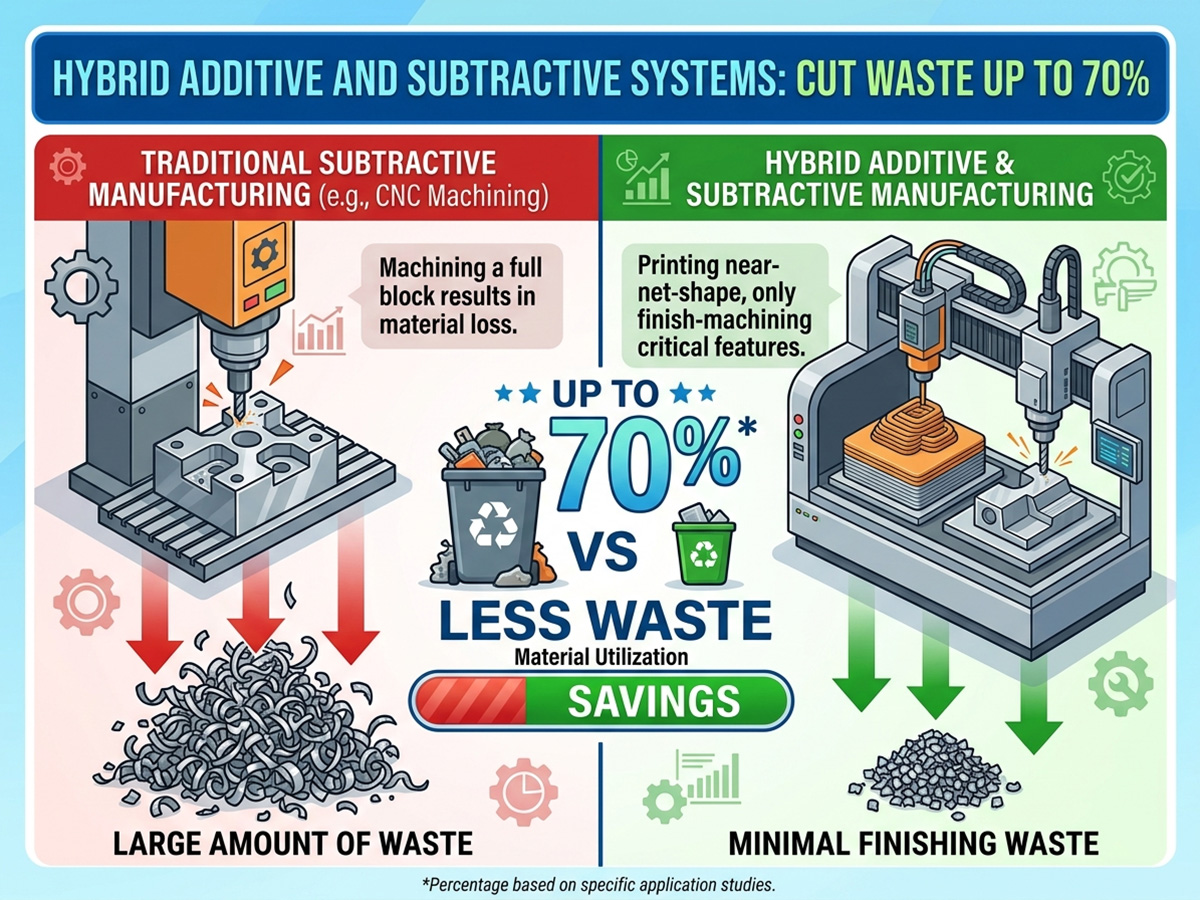
Përfitimi kryesor është një ulje dramatike si në humbjet e materialeve ashtu edhe në kohën e prodhimit. Këto përfitime vijnë nga ndërtimi i formave pothuajse të njëjta në vend të gdhendjes së pjesëve nga pjesë të mëdha.
• Mbetjet e materialeve u ulën me 55 deri në 70 përqind krahasuar me përpunimin mekanik nga materiali i ngurtë
• Kohët e përgatitjes shkurtohen me 65 deri në 80 përqind për pjesët komplekse të hapësirës ajrore dhe mjekësore
• Më pak konfigurime, pasi ndërtimi dhe përfundimi ndodhin në një makinë
• Lidhjet e shtrenjta si titaniumi dhe Inconeli përdoren në mënyrë efikase, nuk shndërrohen në çipa
• Pjesët e konsumuara ose të dëmtuara me vlerë të lartë mund të riparohen në vend që të skrapohen dhe të ribëhen
Për materiale si titaniumi, ku një raport tradicional "blej për të fluturuar" mund të nënkuptojë prerjen e pjesës më të madhe të shufrës së papërpunuar, kursimet janë veçanërisht të rëndësishme. Hibridi e përmbys këtë raport duke depozituar afër formës përfundimtare.
Përpunimi Tradicional kundrejt Hibridit: Një Krahasim i Kostos
| Matje | Përpunimi nga materiali i ngurtë | Prodhimi Hibrid |
|---|---|---|
| Lënda e parë e përdorur | Shufër e madhe, shumica e hequr | Formë afër rrjetës, tepricë minimale |
| Mbetjet materiale | I lartë (copa të skuqura dhe mbeturina) | 55-70% të ulët |
| koha Lead | Faza të gjata, të shumëfishta | 65-80% më të shkurtër |
| Konfigurimet e nevojshme | Makina të shumëfishta | Konfigurim i vetëm |
| Aftësia për riparimin e pjesëve | E pamundur | Po, depozito dhe ripërpuno |
| Kompleksiteti më i mirë i pjesës | E thjeshtë në të moderuar | Karakteristika të larta, të brendshme |
Aplikimet në botën reale
Sistemet hibride nuk janë për çdo punishte, por në industritë e duhura ato zgjidhin probleme që asnjë makinë me një proces të vetëm nuk mund t'i zgjidhë. Ja ku ato ofrojnë vlerën më të madhe.
AerospaceTehe, kllapa dhe pjesë strukturore prej titaniumi të turbinave ku kursimi i materialeve dhe gjeometria komplekse janë të rëndësishme.
MjekësorImplante dhe instrumente të personalizuara me forma organike, aliazhe biokompatibile dhe toleranca të ngushta.
Vegla dhe formaKallëpe me kanale ftohjeje konformale që janë të pamundura të përpunohen në mënyrë konvencionale, plus riparim i shpejtë i veglave të konsumuara.
Energjia dhe mbrojtjaRiparimi i komponentëve të turbinave dhe motorëve me vlerë të lartë, dhe prodhimi i pjesëve të specializuara me vëllim të ulët.
Gjysma zbritëse e këtyre sistemeve mbështetet në të njëjtën teknologji precize shumë-aksore që gjendet në sistemet e pavarura. Makina CNC me 5 boshte, të cilat trajtojnë gjeometritë komplekse të përfundimit që kërkojnë pjesët hibride.
Përfitimet kryesore në një vështrim
✓ Më pak mbeturina: ndërtimi pothuajse në formë neto ul konsumin e aliazheve të shtrenjta.
✓ Dorëzim më i shpejtë: një makinë zëvendëson një rrjedhë pune shumëfazore.
✓ Gjeometri komplekse: kanalet e brendshme dhe format e lira bëhen të mundshme.
✓ Mundësia e riparimit: restauroni pjesët e konsumuara me vlerë të lartë në vend që t'i zëvendësoni ato.
✓ Fleksibiliteti i materialit: kombinoni ose gradoni metale të ndryshme brenda një pjese.
✓ Inventar i reduktuar: ndërtoni sipas kërkesës në vend që të ruani pjesë të mëdha metalike në stok.
Avantazhi i Qëndrueshmërisë
Përtej shpejtësisë dhe kostos, prodhimi hibrid mbart një argument të fortë mjedisor. Ulja e mbeturinave materiale me më shumë se gjysmën zvogëlon drejtpërdrejt energjinë dhe lëndën e parë të përfshirë në çdo pjesë.
Pluhuri dhe teli metalik prodhohen me një konsum të konsiderueshëm energjie, kështu që përdorimi vetëm i asaj që i nevojitet pjesës shmang mbeturinat në burim. Kjo ka më shumë rëndësi me lidhjet me intensitet të lartë energjie, si superlidhjet e titanit dhe nikelit.
Mundësia e riparimit shton një shtresë tjetër kursimesh. Restaurimi i një tehu turbine ose kallëpi injeksioni të konsumuar zgjat jetëgjatësinë e një komponenti ekzistues, duke shmangur koston e plotë të energjisë dhe materialeve të prodhimit të një zëvendësimi nga e para.
Ndërsa blerësit u kërkojnë gjithnjë e më shumë furnizuesve raportim të karbonit dhe procese me më pak mbetje, prodhimi hibrid e pozicionon një punishte për të përmbushur këto kërkesa, duke përmirësuar njëkohësisht marzhet e fitimit.
A është hibridi i duhur për dyqanin tuaj?
Sistemet hibride kanë një çmim të lartë dhe një kurbë të vështirë mësimi, kështu që ato nuk janë hapi i duhur për çdo operacion. Vendimi varet nga lloji i punës që bëni.
Hibridi ka kuptim kur: prodhoni pjesë komplekse në aliazhe të shtrenjta, keni nevojë për karakteristika të brendshme që nuk mund të përpunohen në mënyrë konvencionale, riparoni komponentë me vlerë të lartë ose kryeni punë të specializuar me vëllim të ulët ku reduktimi i konfigurimit ia vlen.
Përpunimi konvencional fiton kur: pjesët tuaja kanë gjeometri të thjeshta në materiale të përballueshme, kryeni prodhim me vëllim të lartë, ose tolerancat dhe përfundimet tuaja janë të arritshme vetëm me frezim dhe tornim standard.
Shumica e punishteve shërbehen më mirë duke ndërtuar së pari aftësi të thella në përpunimin preciz dhe bashkimin e metaleve, dhe më pas duke shtuar teknologji hibride pasi përzierja e pjesëve e justifikon qartë atë.
Si po pyesin njerëzit në të vërtetë për sistemet hibride
Këto pyetje bisedore pasqyrojnë atë që prodhuesit duan të dinë para se të investojnë. Nëse ju duken të njohura, hibridi mund të jetë në planin tuaj:
• "Cili është ndryshimi midis prodhimit aditiv dhe atij zbritës?"
• "A mundet vërtet një makinë 3D shtypi dhe makina CNC e njëjta pjesë?
• "Sa material kursen në të vërtetë prodhimi hibrid?"
• "A ia vlen hibridi për një dyqan të vogël apo vetëm për hapësirën ajrore?" "
• "A mund ta riparoj një pjesë të konsumuar të turbinës në vend që ta ribëj atë?"
• "Çfarë metalesh mund të shtypin dhe presin makinat hibride?"
Gabime të Zakonshme Kur Konsideroni Prodhimin Hibrid
Hibridi është i fuqishëm, por është i lehtë për t’u gjykuar gabim. Shmangni këto gabime përpara se të përcaktoni buxhetin:
• Duke supozuar se zëvendëson të gjitha makinat tuajaHibridi shkëlqen në pjesë komplekse dhe me vlerë të lartë, jo në prodhim të thjeshtë me vëllim të lartë.
• Nënvlerësimi i kompleksitetit të programimitKoordinimi i shtigjeve të mjeteve shtesë dhe zbritëse kërkon aftësi të specializuara CAM.
• Duke injoruar përpunimin pasuesMetali i depozituar shpesh ka nevojë për trajtim termik për të arritur vetitë e plota të materialit.
• Duke anashkaluar kualifikimin e materialitPjesët hapësinore dhe mjekësore kërkojnë procese depozitimi të certifikuara dhe të përsëritshme.
• Blerja e pjesëve të gabuaraNëse puna juaj është gjeometri e thjeshtë në material të lirë, përpunimi konvencional fiton në kosto.
• Anashkalimi i investimit në aftësiOperatorët kanë nevojë për trajnim si në disiplinat e aditivëve ashtu edhe në ato të përpunimit mekanik.
Për shumicën e punishteve, pika praktike e fillimit është fillimisht zotërimi i përpunimit preciz të metaleve. Një makinë metalike CNC ndërton themelin zbritës që teknologjia hibride e zgjeron më vonë.
Ku po shkon prodhimi hibrid
Teknologjia po zhvillohet me shpejtësi. Ndërtuesit e makinerive po integrojnë monitorim më të mirë gjatë procesit, planifikim më të zgjuar të rrugës së mjeteve dhe kontroll më të rreptë mbi cilësinë e materialit të depozituar.
Ndërsa shpejtësia e depozitimit rritet dhe kostot bien, sistemet hibride pritet të kalojnë përtej hapësirës ajrore dhe mjekësore në tregje më të gjera industriale të veglave dhe riparimeve. Kombinimi i përfitimeve nga qëndrueshmëria dhe kursimeve në kohën e përgatitjes e bën këtë kategori një nga ato që duhet ndjekur.
Dyqanet që eksperimentojnë me këto procese sot po ndërtojnë ekspertizën që do të përcaktojë prodhimin e përparuar nesër. Ndiqni zhvillimet më të fundit në... Lajme për industrinë CNC.
Pyetjet e bëra më shpesh
Çfarë është prodhimi hibrid aditiv dhe zbritës?
Është një proces që kombinon 3D Shtypja e metaleve dhe përpunimi CNC në një makinë të vetme. Materiali depozitohet për të ndërtuar një pjesë pothuajse në formë rrjete, pastaj përpunohet me saktësi deri në tolerancat përfundimtare në të njëjtën konfigurim.
Sa mbetje materiale kursen prodhimi hibrid?
Sistemet hibride zvogëlojnë mbeturinat e materialeve me 55 deri në 70 përqind krahasuar me përpunimin mekanik nga materiali i ngurtë, sepse ato ndërtohen afër formës përfundimtare në vend që të presin sasi të mëdha metali.
Cili është ndryshimi midis prodhimit shtesë dhe atij zbritës?
Aditivët ndërtojnë një pjesë duke shtuar material shtresë pas shtrese. Zbritja heq materialin nga një bllok i ngurtë. Aditivët minimizojnë mbeturinat dhe mundësojnë forma komplekse, ndërsa zbritja ofron toleranca të ngushta dhe përfundime të imëta.
Çfarë metodash depozitimi përdorin makinat hibride?
Dy metodat kryesore janë Depozitimi i Energjisë së Drejtuar (DED), i cili përdor një lazer për të shkrirë pluhurin ose telin, dhe Prodhimi Shtues me Hark Teli (WAAM), i cili përdor një hark elektrik për të shkrirë telin për ndërtime më të shpejta dhe më të mëdha.
A mund të riparojnë makinat hibride pjesët ekzistuese?
Po. Një nga rastet më të forta të përdorimit është riparimi i pjesëve me vlerë të lartë të konsumuara ose të dëmtuara, siç janë tehet dhe veglat e turbinës, duke depozituar material të ri dhe më pas duke i ripërpunuar sipas specifikimeve.
A është prodhimi hibrid vetëm për hapësirën ajrore dhe mjekësinë?
Ato industri e përvetësuan të parat, por përfitojnë edhe industria e veglave, prodhimi i formave, energjia dhe mbrojtja. Çdo aplikim me gjeometri komplekse, materiale të shtrenjta ose nevoja për riparim është një kandidat i fortë.
Cilat metale mund të përpunojnë sistemet hibride?
Materialet e zakonshme përfshijnë titanin, çelikun inox, Inconelin dhe lidhje të tjera të nikelit, çelikët e veglave dhe aluminin. Hibridi madje mund të klasifikojë ose kombinojë metale të ndryshme brenda një pjese të vetme.
Ndërtoni Fondacionin Tuaj të Precizionit me STYLECNC
Prodhimi hibrid fillon me zotërimin e përpunimit të saktë dhe bashkimit të metaleve. Eksploro STYLECNC Qendrat e përpunimit CNC makinat e saldimit me lazer për të pajisur dyqanin tuaj me teknologjitë kryesore që qëndrojnë pas prodhimit të gjeneratës së ardhshme.